 16000 Ventura Blvd, Ste 400, Encino, CA, United States, 91436



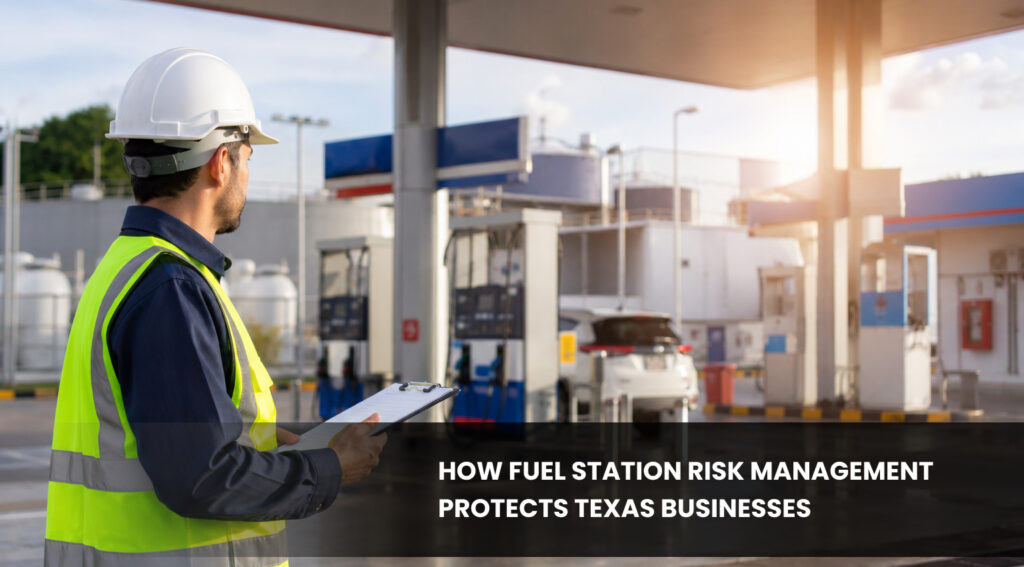
How Fuel Station Risk Management Protects Texas Businesses
If you own or manage a fuel station in Texas, you already know the risks are not small. Between flammable inventory, high traffic, and constant customer turnover, fuel station risk management is not optional, it is survival. Here are the questions Texas fuel retailers ask most, answered plainly.
According to the National Fire Protection Association, U.S. fire departments respond to roughly 4,150 gas station fires every year, causing an average of $30 million in direct property damage annually.
That is not a statistic you want to learn the hard way.
Let’s answer some common questions in this regard.
1. What exactly does fuel station risk management cover?
It covers everything from fire and explosion exposure to slip-and-fall claims, environmental contamination, equipment failures, and theft. Good fuel station risk management identifies these threats before they become expensive problems.
For Texas fuel retailers, risk management also includes employee safety training, spill prevention procedures, emergency response planning, and regular equipment inspections. The goal is not simply to react to incidents but to reduce the likelihood of them occurring in the first place.
2. Why is Texas fuel retail insurance different from a standard business policy?
Texas fuel retail insurance is built specifically around underground storage tanks, fuel dispensers, environmental liability, and the risks associated with selling gasoline. A generic commercial policy often excludes or limits many of these exposures.
Fuel retailers face risks that most businesses never encounter, including contamination claims, fuel leaks, and fire hazards. Specialized coverage helps ensure that these industry-specific risks are properly addressed.
3. What does gas station owners insurance Texas typically include?
Most gas station owners insurance Texas policies bundle property coverage, general liability, pollution liability, and business interruption coverage. Some owners also add equipment breakdown coverage for pumps, refrigeration units, and point-of-sale systems.
Additional options may include cyber liability insurance, crime coverage, and workers' compensation. The exact combination depends on the size of the operation and the services offered at the location.
4. How much does fuel station insurance cost Texas businesses on average?
Fuel station insurance costs Texas businesses pay can vary significantly based on location, number of pumps, fuel volume, claims history, and whether a convenience store operates on-site.
A station with newer equipment, strong safety controls, and a clean claims record will generally receive more favorable pricing than a higher-risk operation. The best way to determine actual costs is through a customized insurance review.
5. Is environmental liability really that big of a deal?
Yes, and it remains one of the most expensive risks facing fuel retailers. A single underground storage tank leak can contaminate soil or groundwater, leading to costly cleanup efforts and regulatory oversight.
Environmental claims can quickly reach six figures or more. That is why pollution liability coverage is often considered one of the most important components of Texas fuel retail insurance.
6. What is the best fuel station insurance Texas owners can get for multi-location businesses?
The best fuel station insurance Texas operators choose often includes a master policy structure that combines multiple locations under a single insurance program.
This approach simplifies administration, streamlines renewals, and can improve pricing efficiency. It also helps ensure consistent coverage standards across all locations.
7. Do I need coverage for employee-related risks too?
Absolutely. Employees interact with customers, handle fuel transactions, and perform tasks around potentially hazardous equipment every day.
Workers' compensation helps cover workplace injuries, while employment practices liability insurance can help protect against claims involving discrimination, harassment, or wrongful termination. Together, these coverages provide important protection for both the business and its workforce.
8. How does fuel station risk management help lower long-term costs?
Effective fuel station risk management helps prevent incidents before they occur. Investing in fire suppression systems, spill containment measures, employee training, and security systems can reduce both claims frequency and operational disruptions.
Many insurers also reward strong risk management practices with premium discounts, creating savings that extend beyond loss prevention.
9. What should I ask an insurance provider before signing a policy?
Ask whether the policy includes pollution liability, equipment breakdown coverage, and business interruption protection. You should also understand claim response times and any exclusions related to tank age or environmental incidents.
It is equally important to ask whether coverage limits automatically adjust if fuel inventory values increase throughout the year.
10. How do I know if my current coverage is actually enough?
The reality is that many business owners only discover coverage gaps after filing a claim. A policy that was adequate several years ago may no longer match current property values, fuel inventory levels, or operational risks.
Regular reviews with a specialist can help determine whether your coverage still aligns with your business needs and risk profile.
Additional Risk Factors Texas Fuel Retailers Should Monitor
Even with strong insurance coverage, fuel stations face operational challenges that require ongoing attention.
| Risk Factor | Why It Matters |
| Underground storage tanks | Leaks can trigger costly environmental cleanup |
| High customer traffic | Increases the likelihood of liability claims |
| Flammable inventory | Raises fire and explosion exposure |
| 24-hour operations | Creates additional security and theft risks |
| Equipment failure | Can interrupt fuel sales and revenue |
| Severe weather | Storms can damage structures and equipment |
Fuel retailing in Texas is a demanding business, and the risks do not take a day off. Whether you run one location in Houston or five across the state, having the right protection in place is what keeps a bad day from becoming a business-ending one.
Understanding these risks is a key part of effective fuel station risk management and helps owners make informed decisions about both insurance and operational safeguards.
Talk to a Specialist Before Something Goes Wrong
Fuel station risk management is not something to figure out after an incident happens.
Book a consultation with e360 Insurance Services today and get coverage built specifically for Texas fuel retailers.