 16000 Ventura Blvd, Ste 400, Encino, CA, United States, 91436



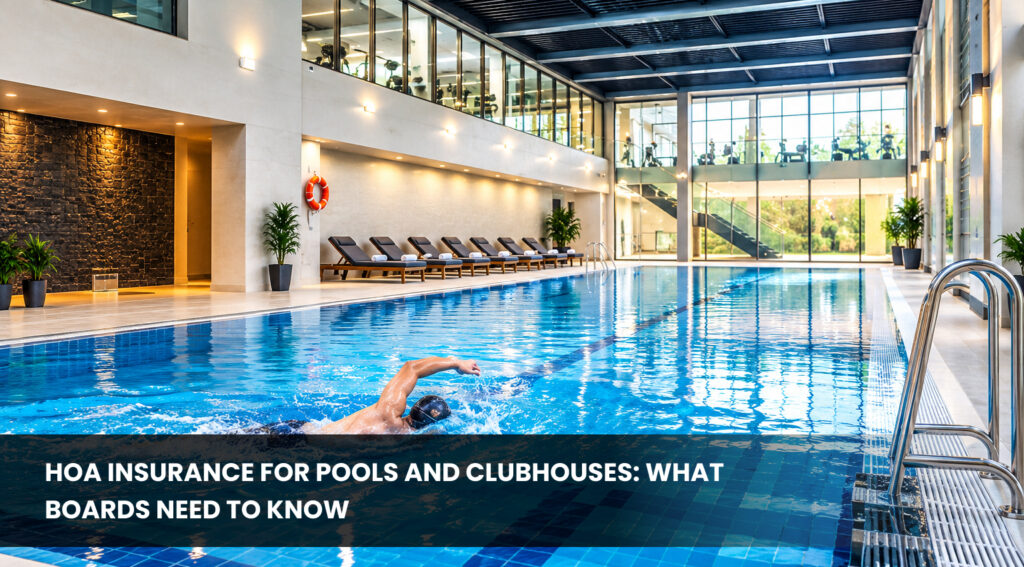
HOA Insurance for Pools and Clubhouses: What Boards Need to Know
HOA pool insurance helps boards evaluate protection for pool facilities, related equipment, and liability risks involving residents and guests. The important part is knowing that damage to the pool, an injury on the deck, and a claim involving a clubhouse event are different situations. Each may involve a different policy, coverage limit, or exclusion.
For a California homeowners association, a swimming pool or clubhouse can be one of the community’s biggest selling points and one of its most overlooked insurance exposures.
What Makes Pool and Clubhouse Insurance Different for HOAs?
A community pool is more than a body of water. It includes pumps, filters, fencing, gates, decks, lighting, and sometimes showers or pool houses. A clubhouse may contain furniture, appliances, fitness equipment, meeting rooms, and event spaces.
Each part creates a different exposure. A failed pool pump might lead to an equipment claim. A leaking pipe could damage the clubhouse floor. A guest who slips on a wet surface might bring a liability claim.
That is why HOA pool insurance should be reviewed as part of the association’s overall property and liability program, not treated as a standalone solution.
For California boards, another detail matters: the governing documents determine what the association is responsible for maintaining, while the insurance policy determines what is insured and under which conditions.
Those responsibilities and coverages do not always line up perfectly.
What Does HOA Pool Insurance Actually Cover?
The answer depends on the association’s policy. Some master policies include pool structures and equipment within covered property, while others may have specific conditions, sublimits, or exclusions.
Boards should ask their insurance professional to confirm whether the policy addresses:
- Physical damage: Covered damage to insured pool structures, buildings, and equipment
- General liability: Certain claims involving bodily injury or property damage for which the association is legally responsible
- Equipment breakdown: Certain mechanical or electrical failures, if this coverage is included
- Outdoor property: Potential limits or restrictions affecting furniture, fencing, lighting, and other items
- Additional liability limits: Umbrella or excess coverage above eligible underlying policies
Do not assume that every feature around the pool is automatically covered because the main building or community property is insured. The policy wording, property schedule, exclusions, and endorsements matter.
Why Should Pool Safety Be Part of the Insurance Conversation?
Pool injuries can have serious consequences, and boards need to take their responsibilities seriously.
The Centers for Disease Control and Prevention estimates that approximately 4,000 fatal unintentional drownings occur each year in the United States, an average of 11 deaths per day. This is a national figure, not an HOA-specific statistic, but it illustrates why pool safety deserves sustained attention.
For an association, the practical response starts with consistent maintenance and clear operating procedures.
- Inspect gates, barriers, pool decks, and access points.
- Keep safety equipment available and in working condition.
- Address damaged surfaces and broken fixtures promptly.
- Maintain pool rules and communicate them clearly to residents.
- Document inspections, repairs, and reported incidents.
- Confirm which California and local pool safety requirements apply to the facility.
Insurance can help with certain covered claims, but it cannot replace safe operations. Nor does having a policy automatically mean every injury or pool-related loss will be covered.
What Does Clubhouse Liability Mean for an HOA?
Clubhouse liability refers to liability exposures associated with the clubhouse and how the association operates it. The relevant coverage may sit within the HOA’s general liability policy, subject to its terms, rather than under a separate policy with that exact name.
Consider a clubhouse that residents can reserve for birthday parties, board meetings, or neighborhood events. A visitor trips over a damaged threshold. Someone spills a drink on a stairway and another guest slips. A vendor damages a resident’s property while setting up for an event.
Whether a claim is covered depends on the circumstances, the association’s legal responsibility, and the policy wording.
Boards should review the following details:
- Whether private events or outside groups can use the facility
- Whether alcohol is permitted
- Who is responsible for cleaning and inspections
- Whether vendors must provide proof of insurance
- Whether rental agreements clearly explain facility rules and responsibilities
A waiver or rental agreement may help establish expectations, but it should not be treated as a substitute for insurance or appropriate safety measures.
How Can Boards Check Whether HOA Amenity Coverage is Adequate?
HOA amenity coverage should reflect the facilities the association actually owns or maintains. A community with a pool, spa, clubhouse, gym, tennis courts, and outdoor kitchen has a different exposure from one with only a small meeting room.
During an insurance review, boards can use this checklist to identify questions that need answers.
| What to review | What the board should confirm |
| Pool and spa | Are the structures and relevant equipment included in covered property? |
| Clubhouse | Are the building, contents, and applicable liability exposures addressed? |
| Outdoor amenities | Are decks, furniture, courts, and outdoor kitchens covered where appropriate? |
| Equipment | Is equipment breakdown coverage needed? |
| Events and rentals | Has the insurer been told how the facilities are used? |
| Liability limits | Are limits appropriate for the community’s size and activities? |
| Exclusions | Are there restrictions involving pools, events, or particular activities? |
| Replacement values | Are insured property values and rebuilding estimates up to date? |
This review is especially useful before renewal, after adding a new amenity, or when the association changes how residents can use an existing facility.
Which Insurance Mistakes Should HOA Boards Avoid?
Some coverage problems begin with assumptions rather than obvious policy errors.
- First, do not assume the master policy covers every amenity
Confirm how each structure, item of equipment, and outdoor feature is treated.
- Second, do not confuse property damage with liability
A policy that covers damage to an insured pool structure does not necessarily cover a claim from someone injured nearby.
- Third, do not overlook changing use
If the clubhouse starts hosting more private events or the pool hours expand, the association should discuss those changes with its insurance professional.
- Finally, do not rely on insurance alone
Regular inspections, documented maintenance, clear rules, and prompt repairs remain essential.
How Can e360 Insurance Services Help Your HOA?
An HOA board has plenty to manage already: budgets, maintenance requests, resident concerns, vendor contracts, and community rules. Insurance should make those responsibilities easier to manage, not create uncertainty about what happens after a loss.
e360 Insurance Services can help your association review pool and clubhouse exposures, understand relevant policy terms, and identify questions about limits, exclusions, and coverage gaps. The goal is to connect your insurance program with the actual amenities and activities in your community.
Contact e360 Insurance Services to schedule a consultation about your HOA’s pool, clubhouse, and shared-property coverage. A focused review can help your board make better-informed decisions before a claim puts those decisions to the test.