 16000 Ventura Blvd, Ste 400, Encino, CA, United States, 91436



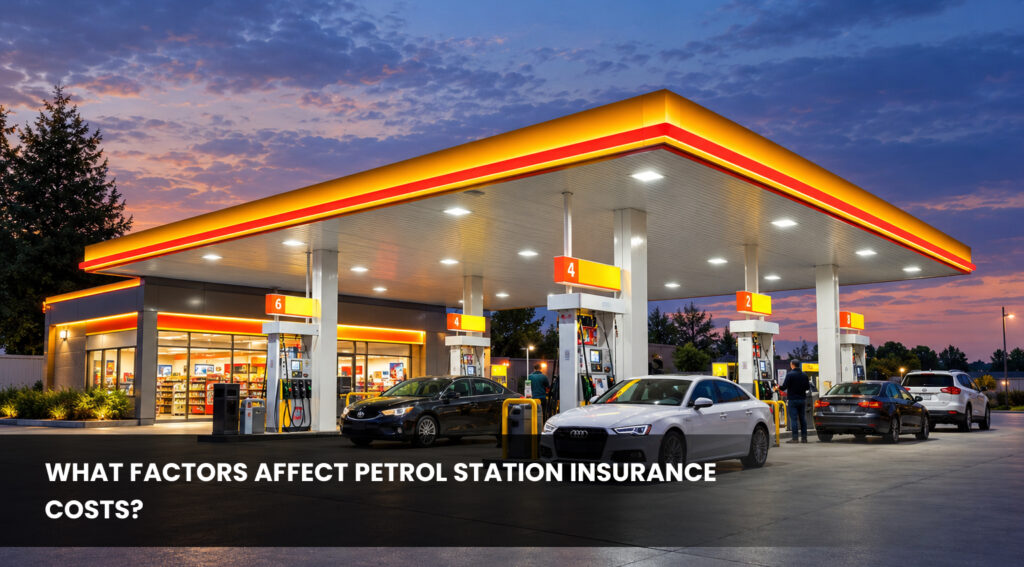
What Factors Affect Petrol Station Insurance Costs?
Petrol station insurance costs depend on several factors, including the size of the operation, fuel storage capacity, location, property value, claims history, employee count, and the types of coverage selected.
Because petrol stations combine fuel handling, retail activity, customer traffic, equipment, and environmental exposure, insurers assess them differently from many standard businesses.
For owners, understanding these gas station insurance cost factors can make it easier to choose appropriate protection and avoid paying for coverage that does not match the actual operation.
Why Can Petrol Station Insurance Cost More Than Standard Business Insurance?
Petrol stations have a unique combination of risks. Customers are constantly moving around pumps, employees handle fuel and equipment, and the property contains valuable infrastructure that must remain operational.
Fire, fuel leaks, customer injuries, theft, equipment failure, and property damage can all create substantial claims. In fact, the National Fire Protection Association estimated an average of 4,150 fires per year at U.S. service or gas station properties between 2014 and 2018, resulting in an average of $30 million in direct property damage annually.
This risk profile is one reason petrol station insurance needs to be structured around the specific operation rather than treated like ordinary retail insurance.
Which Factors Have the Biggest Impact on Insurance Premiums?
Several underwriting factors influence what a station ultimately pays. The most important ones include:
| Cost Factor | Why It Matters |
| Location | Traffic levels, local risks, crime exposure, and surrounding property can affect premiums |
| Fuel Storage | Larger fuel storage capacity can increase property and environmental exposure |
| Property Value | More valuable buildings, canopies, equipment, and fixtures require higher limits |
| Revenue | Higher sales volume can indicate greater customer and operational exposure |
| Claims History | Frequent or severe past claims may increase premiums |
| Employees | A larger workforce can increase workers' compensation exposure |
| Services Offered | Car washes, repair bays, food service, or convenience stores may add risk |
| Coverage Limits | Higher limits generally result in higher premiums |
Understanding these factors gives owners a clearer picture of why two similar-looking stations can receive very different quotes.
How Does the Location of a Petrol Station Affect Its Insurance Cost?
Location can have a major influence on petrol station insurance pricing. A busy station on a major roadway may have considerably more vehicle and pedestrian activity than a smaller station in a low-traffic area.
Insurers may consider:
- Traffic volume and customer frequency
- Local crime and theft exposure
- Weather and catastrophe risks
- Proximity to other businesses and structures
- Emergency response accessibility
- Historical claims in the surrounding area
A station located near busy commercial corridors may therefore require different risk management and coverage limits than a lower-volume operation.
How Does Fuel Storage Influence Coverage Requirements?
Fuel storage is one of the defining characteristics of a petrol station. Underground storage tanks, fuel lines, dispensers, and related systems create exposures that ordinary commercial property policies may not fully address.
A strong fuel station insurance program should account for the station's storage infrastructure and potential environmental exposures. Depending on the operation and policy, specialized environmental liability coverage may also be appropriate.
Leaks or contamination can lead to cleanup expenses, third-party claims, and significant business disruption, making this an important part of the insurance discussion.
What Role Does Property and Equipment Value Play?
A petrol station depends on much more than its building. Pumps, payment systems, underground tanks, refrigeration equipment, signage, lighting, canopies, and convenience-store inventory can represent a substantial investment.
For this reason, gas station commercial insurance should reflect the actual replacement value of the business assets.
Underestimating property values can create coverage gaps after a major loss. On the other hand, accurately documenting buildings, equipment, inventory, and improvements helps ensure that coverage limits are based on realistic figures.
Can Business Operations Change the Cost of Insurance?
Absolutely. Not every petrol station operates the same way.
A basic fuel-only operation may have a different risk profile from a location that also includes a convenience store, restaurant, automotive repair facility, car wash, or other services.
These additional activities can influence petrol station insurance because they introduce new customers, equipment, employees, inventory, and liability exposures.
For example, a convenience store increases the need to consider retail inventory and premises liability, while an automotive service area can introduce additional equipment and workplace risks.
How Does Claims History Affect Petrol Station Insurance?
An insurer will typically review previous claims when evaluating a business. A history of frequent property losses, customer injuries, equipment damage, or other incidents may signal greater future exposure.
A strong loss history can work in the opposite direction. Consistent safety procedures, documented maintenance, employee training, and effective risk controls can demonstrate responsible management.
This is why petrol station insurance should be viewed as part of an overall risk management strategy rather than simply another operating expense.
What Coverage Should a Petrol Station Consider?
The right protection depends on the operation, but common coverage areas can include:
| Coverage | Purpose |
| General Liability | Helps address third-party injury and property damage claims |
| Commercial Property | Protects covered buildings, equipment, fixtures, and inventory |
| Environmental Liability | Addresses certain pollution and contamination exposures |
| Equipment Breakdown | Helps with covered mechanical or electrical equipment failures |
| Workers' Compensation | Protects employees for covered work-related injuries |
| Commercial Auto | Covers eligible business-owned vehicles |
| Business Income | Helps replace covered lost income after an insured interruption |
A customized fuel station insurance program can bring the appropriate protections together based on the station's actual activities and exposures.
How Can Petrol Station Owners Manage Their Insurance Costs?
Keeping premiums under control does not necessarily mean choosing the cheapest policy. The better approach is to reduce avoidable risk while making sure coverage limits accurately reflect the business.
Consider these practical steps:
- Maintain pumps, tanks, electrical systems, and other critical equipment properly.
- Keep detailed records of inspections, maintenance, and employee safety training.
- Review claims history and address recurring causes of loss.
- Compare coverage options through an experienced commercial insurance professional.
- Review the policy whenever the station adds services, equipment, employees, or locations.
Understanding the major gas station insurance cost factors can help owners make better decisions when comparing quotes.
Is the Cheapest Petrol Station Insurance Policy Always the Best Choice?
Not necessarily. A low premium can become expensive if the policy contains inadequate limits, restrictive exclusions, or coverage gaps.
The goal should be value, not simply the lowest number on the quote. The right gas station commercial insurance should provide meaningful protection for the risks that could seriously affect the business.
That means looking at coverage limits, deductibles, exclusions, endorsements, property values, liability exposure, and environmental risks together.
What Should You Look for When Choosing Insurance?
Start with the actual way your station operates. Consider your property, fuel storage, services, equipment, workforce, customer volume, and previous claims.
Then work with an insurance professional who can compare appropriate options and explain where additional protection may be necessary.
For many owners, understanding these gas station insurance cost factors before requesting quotes can make the process faster, clearer, and more productive.
Protect Your Petrol Station With Coverage Built Around Your Business
Your station represents a significant investment, and one unexpected incident can affect property, revenue, employees, and customer relationships at the same time. The right petrol station insurance helps create a stronger financial safety net while allowing you to focus on running the business.
For tailored coverage options, speak with e360 Insurance Services. Their team can help you evaluate your risks, compare suitable coverage, and build an insurance program around your petrol station's needs.
Ready to review your coverage?
Contact e360 Insurance Services to discuss your options and book a consultation today.