 16000 Ventura Blvd, Ste 400, Encino, CA, United States, 91436



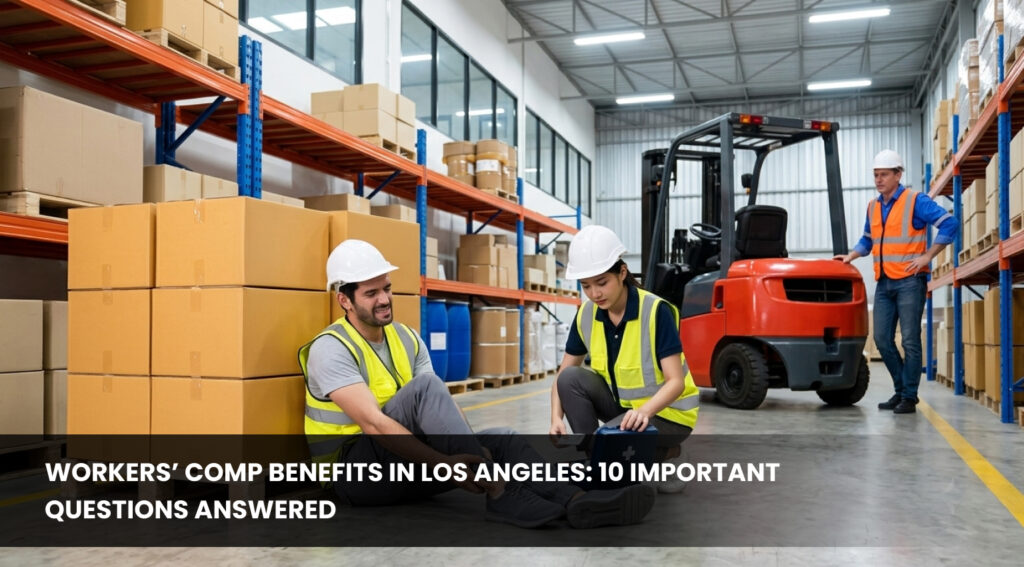
10 Important Questions Answered for Workers Comp Benefits in Los Angeles
Workers comp benefits in Los Angeles are designed to help employees who suffer a work-related injury or illness by providing medical care, partial wage replacement, disability benefits, and other forms of support. For employers, understanding these benefits is an important part of choosing appropriate workers comp coverage and making sure employees have support when they need it.
California's workers' compensation system provides several types of benefits, including medical care, temporary disability, permanent disability, supplemental job displacement benefits, and death benefits. The California Division of Workers' Compensation confirms that these benefits are intended to help injured employees recover, manage lost income, and return to work.
For businesses, the goal is straightforward: when an employee gets hurt because of work, they should have a system in place to receive appropriate support without the employer having to navigate the situation alone.
1. What types of workers comp benefits are available in California?
The benefits available to an injured employee depend on the nature and severity of the injury, the employee's ability to work, and other factors. The main categories include:
- Medical treatment
- Temporary disability benefits
- Permanent disability benefits
- Supplemental job displacement benefits
- Death benefits
- Return-to-work support in qualifying situations
Here is a simple overview:
| Benefit | What it generally provides | When it may apply |
| Medical care | Treatment related to the work injury or illness | When an employee needs medical attention |
| Temporary disability | Partial wage replacement | When the employee cannot perform their usual work while recovering |
| Permanent disability | Payments for lasting work-related impairment | When an injury results in permanent disability |
| Supplemental job displacement | Support for retraining or skill enhancement | When qualifying employees cannot return to their previous job |
| Death benefits | Payments to eligible dependents and burial expenses | When a work-related injury or illness results in death |
The specific amount and duration of benefits depend on California law and the individual claim.
2. How does medical care work under workers compensation?
Medical treatment is one of the most important workers compensation benefits because an injured employee may need care even when they do not miss work.
California requires claims administrators to authorize and pay for medical care that is reasonably required to cure or relieve the effects of a work-related injury or illness. Treatment is generally evaluated under California's Medical Treatment Utilization Schedule, which uses evidence-based treatment guidelines.
Medical care may include services such as:
- Doctor visits
- Hospital treatment
- Physical therapy
- Prescription medications
- Diagnostic services
- Surgery when medically necessary
- Other appropriate treatment
For an employer, having appropriate workers comp coverage means there is an insurance mechanism to handle covered workplace injury expenses rather than leaving the business to manage these costs independently.
3. What are temporary disability benefits?
Temporary disability benefits are intended for employees who lose wages because a work-related injury prevents them from performing their usual job while they recover.
California's Division of Workers' Compensation states that temporary disability generally pays two-thirds of the gross wages lost, subject to the applicable legal minimums and maximums. Payments generally begin when a doctor determines that the employee cannot perform their usual work for more than three days or after an overnight hospitalization.
This is an important part of workers compensation benefits because an employee can face financial pressure while recovering.
Temporary disability payments generally continue until the employee returns to work, is released to work, or reaches a point where the treating doctor determines that the injury has improved as much as it is expected to.
4. What happens if an employee has a permanent disability?
Not every workplace injury results in a permanent disability. However, when an injury leaves a lasting impairment that affects an employee's ability to earn a living, permanent disability benefits may apply.
California determines permanent disability benefits using factors that include the date of injury, the employee's impairment percentage, age, and occupation.
The amount is not simply based on the employee's medical bills.
This distinction is important for employers because workers compensation coverage is designed to address different aspects of a qualifying workplace injury, not simply pay a hospital bill.
5. Can workers comp help employees return to work?
Yes. Returning to work is another important part of the system.
An employee may be able to return to their existing position with temporary or permanent work restrictions, depending on their condition and the doctor's recommendations.
In some qualifying situations, supplemental job displacement benefits may provide a voucher for retraining or skill enhancement when an employee does not recover completely and does not return to work for the employer.
This means workers comp benefits can extend beyond immediate medical treatment.
They can also support an employee's transition back into the workforce.
6. What happens if a work-related injury results in death?
A workplace injury or illness can have devastating consequences for an employee's family. California workers compensation includes death benefits for eligible dependents when an employee dies from a work-related injury or illness.
Death benefits can include payments to qualifying dependents and reasonable burial expenses. The amount depends on factors such as the employee's dependents and the applicable date-of-injury rules.
This is one reason workers compensation coverage matters beyond everyday workplace accidents. It provides a framework for supporting families when the consequences of an occupational injury are especially serious.
7. Why should Los Angeles businesses understand workers comp coverage?
For employers, workers comp coverage is more than another item on a business insurance checklist.
California requires employers with one or more employees to maintain an effective workers' compensation insurance plan, unless they qualify for an applicable self-insurance arrangement.
For a Los Angeles business, appropriate coverage can help provide access to the benefits required under California's system while reducing the financial uncertainty associated with workplace injuries.
A business should consider factors such as:
- Number of employees
- Type of work performed
- Workplace hazards
- Payroll
- Job classifications
- Claims history
- Business location
- Whether employees work at customer locations or job sites
These details can affect the policy and premium.
8. What should employers look for in workers compensation coverage?
Not all businesses have the same risk profile.
A restaurant, construction company, office, warehouse, and landscaping business can have very different workplace exposures. Their workers compensation coverage should reflect those differences.
| Business consideration | Why it matters |
| Employee count | More employees can mean greater overall exposure |
| Job duties | Physical and hazardous work can create different risks |
| Payroll | Premium calculations commonly consider payroll |
| Classifications | Employee duties can affect classification |
| Claims history | Previous claims may influence underwriting |
| Business operations | Changing operations can change insurance needs |
| Location | Local regulations and market conditions can matter |
When reviewing workers comp insurance Los Angeles options, employers should look beyond the premium and understand the actual policy, classifications, limits, and services provided.
9. How can employers make the claims process easier?
Insurance cannot prevent every workplace accident, but good preparation can make a difficult situation more manageable. Employers should:
- Tell employees how to report workplace injuries.
- Keep required workers' compensation information accessible.
- Respond promptly when an injury is reported.
- Provide the required claim form.
- Maintain accurate employee and payroll records.
- Communicate with the insurance carrier or claims administrator.
- Take workplace safety seriously.
California's Division of Workers' Compensation states that employers should provide the DWC 1 claim form once they are notified of a potentially work-related injury or illness.
For businesses looking for workers comp insurance Los Angeles, choosing an insurance professional who understands California requirements can make the process considerably easier.
10. What should a business know about the cost of workers comp?
The cost of coverage varies from one business to another.
There is no universal workers comp premium for every Los Angeles employer because pricing can depend on payroll, employee classifications, claims history, business operations, and other underwriting factors.
Instead of choosing a policy based solely on price, employers should compare:
- Coverage
- Classification accuracy
- Deductibles, where applicable
- Claims support
- Carrier reputation
- Policy terms
- Premium structure
- Risk management resources
Good workers comp coverage should fit the business rather than simply look inexpensive on a quote.
Need help choosing the right coverage for your business?
Workplace injuries are stressful enough without wondering whether your insurance is properly structured.
If you're reviewing workers comp insurance Los Angeles options, e360 Insurance Services can help you understand your coverage needs and compare solutions based on your business operations.
Talk to e360 Insurance Services today to schedule a consultation and review your workers compensation coverage with an insurance professional.