 16000 Ventura Blvd, Ste 400, Encino, CA, United States, 91436



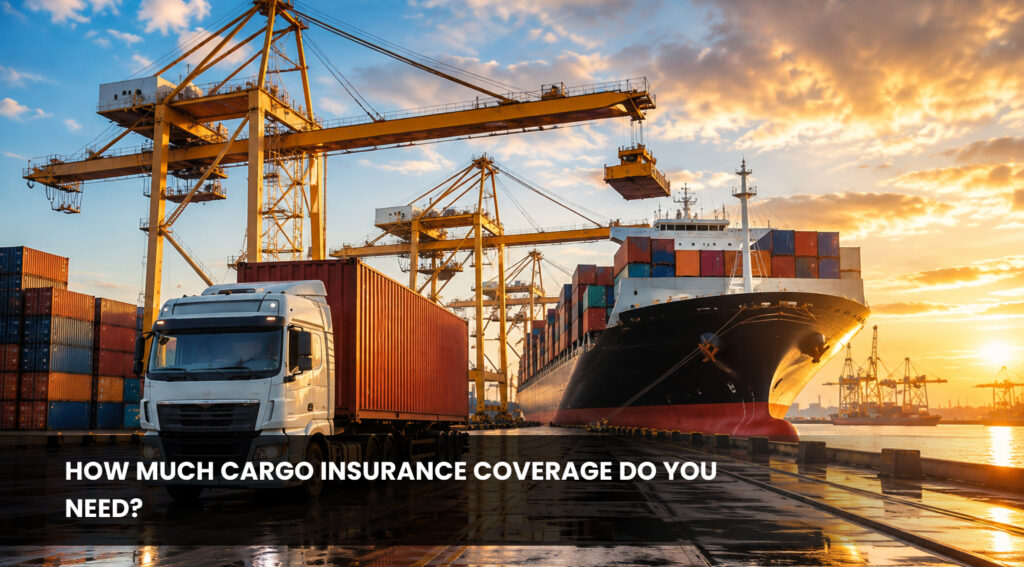
How Much Cargo Insurance Coverage Do You Need?
Cargo insurance coverage should match the maximum value of any single load you haul, with most owner-operators and small carriers needing between $100,000 and $250,000 in motor truck cargo insurance limits for standard dry freight, scaling significantly higher for high-value commodities like electronics, pharmaceuticals, alcohol, and temperature-controlled goods where single-load values can reach into the hundreds of thousands of dollars.
Getting cargo insurance limits wrong is not an abstract risk: under the Carmack Amendment to the Interstate Commerce Act, motor carriers are held strictly liable for cargo loss or damage, meaning you are presumed responsible until proven otherwise, and no loads will be tendered by brokers or shippers without a valid cargo certificate on file.
According to Insurance.com's July 2025 Motor Truck Cargo Insurance Overview, motor truck cargo insurance policies typically range from $500 to $2,000 per year for $100,000 in coverage for standard dry freight, with premium carrier quotes starting at a minimum of $2,500 to $3,000 annually. The spread reflects how dramatically commodity type, operating radius, and loss history move the final rate.
What Coverage Limit Does Your Cargo Insurance Need to Cover?
The starting point for any cargo insurance limit decision is the maximum value of any shipment you will accept. This is not an average. It is the single highest-value load your authority or operating agreement would permit you to carry.
| Commodity Type | Typical Load Value Range | Recommended Minimum Cargo Limit |
| General dry freight | $10,000 to $80,000 | $100,000 |
| Electronics and technology goods | $50,000 to $300,000 | $250,000 to $500,000 |
| Pharmaceuticals | $100,000 to $500,000+ | $500,000 to $1,000,000 |
| Alcohol and beverages | $30,000 to $150,000 | $150,000 to $250,000 |
| Refrigerated food (reefer) | $20,000 to $100,000 | $100,000 to $250,000 |
| Auto hauling (car transport) | $100,000 to $500,000+ | $250,000 to $500,000 |
| Household goods | $50,000 to $200,000 | $100,000 to $250,000 |
| High-theft items (tobacco, spirits, designer goods) | $50,000 to $300,000 | $250,000 to $500,000 |
What Does Motor Truck Cargo Insurance Actually Cover?
Motor truck cargo insurance is not a blanket protection against every possible cargo loss. Understanding what is and is not covered prevents the worst kind of surprise: discovering an exclusion at claim time.
Standard coverage includes:
- Physical loss or damage to the insured cargo during transport
- Theft of the load from the vehicle while parked or in transit
- Collision damage affecting the cargo
- Fire, explosion, and water damage to the freight
Common exclusions that require specific endorsements:
- Temperature-related spoilage without a refrigeration breakdown endorsement
- Debris removal costs following a covered loss
- Loading and unloading damage without a specific endorsement
- Acts of God beyond standard perils without a broadened perils endorsement
- High-theft commodities that may be sublimited or excluded in standard policies
How Does Motor Truck Cargo Insurance Interact with Non-Owned Vehicle Coverage?
Non-owned vehicle coverage is a frequently misunderstood component of commercial trucking programs. It covers your liability exposure when a driver uses a vehicle they own, lease, or borrow that is not in your fleet, to conduct business for your operation.
For carriers using owner-operators under their authority, non-owned vehicle coverage addresses the liability gap that exists when someone else's truck is involved in a loss while working under your dispatch. It does not replace the owner-operator's own physical damage or cargo insurance. It addresses your liability as the motor carrier for losses involving non-fleet vehicles operating under your DOT authority.
| Coverage | What It Covers | Who Needs It |
| Motor truck cargo insurance | Cargo you haul for third parties | All for-hire carriers |
| Non-owned vehicle coverage | Liability when non-fleet vehicles work under your authority | Carriers using owner-operators |
| Physical damage | Your own trucks | Required by lenders if financed |
| Primary liability | Bodily injury and property damage to others | Required, FMCSA minimum $750,000 |
What Factors Drive Your Cargo Insurance Premium?
Cargo insurance premiums are risk-rated to your specific operation. Here are the factors that move your rate most significantly.
- Commodity type: Electronics, alcohol, tobacco, and pharmaceuticals carry the highest rates due to theft frequency and load value
- Operating radius: Regional operations typically rate lower than long-haul cross-country runs
- Loss history: Prior cargo claims are the strongest predictor of future claims and the most significant renewal pricing factor
- Deductible selection: Higher deductibles produce meaningfully lower premiums, with $1,000 to $2,500 deductibles common among owner-operators
- Theft prevention measures: Air-ride trailers, air disc brakes, trailer tracking, and documented security practices can reduce premiums
- Broker and shipper requirements: Some load types require higher limits than you might otherwise carry, directly affecting your premium
How Much Does Motor Truck Cargo Insurance Actually Cost?
For a standard dry freight operation with a $100,000 coverage limit, most owner-operators budget $70 to $125 per month, or $800 to $1,500 annually, according to Trucking Insurance Services' 2026 Cargo Insurance Cost Guide.
High-value or high-theft commodities, reefer loads, and auto hauling all push premiums higher. Reefer operators frequently pay $1,500 to $3,500 annually for cargo coverage, while auto haulers can pay significantly more given the individual load values involved.
Get the Right Cargo Insurance Program Through e360 Insurance Services
Cargo insurance limits, exclusions, and commodity-specific endorsements require a specialist, such as e360 Insurance Services, who understands how cargo underwriting works and which carriers produce competitive rates for your specific freight profile.
The right cargo coverage is just a conversation away. Contact e360 Insurance Services today for a complete commercial trucking insurance review.