 16000 Ventura Blvd, Ste 400, Encino, CA, United States, 91436



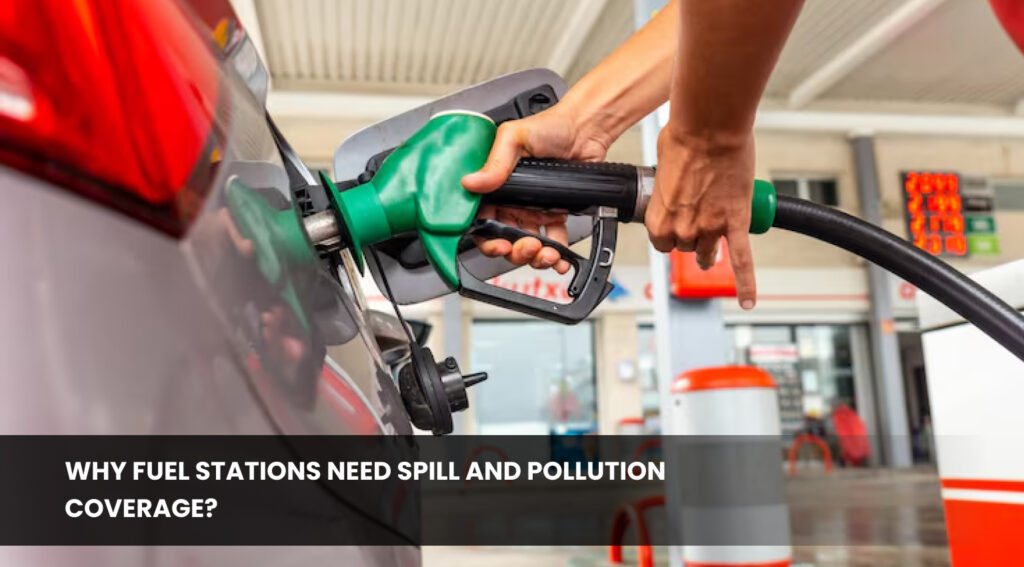
Why Fuel Stations Need Spill and Pollution Coverage
Fuel spill insurance is a specialized environmental liability coverage that pays for the cost of cleaning up fuel contamination, managing regulatory fines, and covering third-party bodily injury and property damage claims when a petroleum release occurs at or near your fuel station.
Standard commercial property and general liability policies exclude pollution events entirely, meaning a fuel station operator who relies on a general business policy without dedicated fuel spill insurance has no coverage for the most financially devastating event specific to their industry.
One underground storage tank leak, one fueling equipment failure, one accidental overfill during tanker delivery can produce cleanup costs that run from $130,000 to over $1 million before any third-party claims are added.
According to CVI Insurance Specialists' 2025 Storage Tank Insurance Guide, the federal minimum coverage requirement for petroleum marketers is $1 million per occurrence, with average cleanup costs ranging from $130,000 to $1 million or more depending on the extent of contamination.
Texas and Arizona, where state assurance funds have been phased out, now require private fuel spill insurance as the primary financial responsibility mechanism for fuel station operators.
Why Does Standard Commercial Insurance Leave Fuel Stations Exposed?
This is the critical issue most fuel station operators discover only after a loss event: their general commercial insurance policy has a pollution exclusion. This exclusion eliminates coverage for any bodily injury, property damage, or cleanup costs arising from a pollution event, and fuel releases qualify as pollution events under virtually every standard policy form.
What standard general liability covers:
- Slip and fall injuries on your forecourt
- Property damage from a vehicle collision at your pumps
- Customer injuries unrelated to fuel contamination
What standard general liability does NOT cover:
- Groundwater contamination from an underground storage tank leak
- Soil remediation costs following a fuel spill at the pump
- Third-party property damage from migrating fuel contamination
- Regulatory fines and penalties from environmental agencies
- Legal defense costs for contamination-related lawsuits
Fuel spill insurance exists specifically to fill this gap.
What Does a Complete Fuel Spill Insurance Program Cover?
A well-structured fuel spill insurance policy for a Texas fuel station addresses the full spectrum of environmental liability that petroleum storage and dispensing creates.
| Coverage Component | What It Covers |
| Pollution cleanup and remediation | Soil and groundwater restoration to regulatory standards |
| Regulatory defense and fines | EPA, state environmental agency penalties and compliance costs |
| Third-party bodily injury | Claims from individuals affected by contamination |
| Third-party property damage | Neighboring property owners whose land is affected by migrating contamination |
| Legal defense costs | Attorney fees and court costs in contamination litigation |
| Emergency response costs | Immediate containment and response at the time of the release |
| Tank leakage insurance | Specific coverage for underground storage tank failure |
What is Tank Leakage Insurance and How Does It Differ?
Tank leakage insurance is often structured as a specific endorsement or standalone policy addressing the unique risk of underground storage tanks (USTs), which are the most common source of fuel contamination at retail fuel stations.
USTs degrade over time. Corrosion, improper installation, overfill events, and equipment failures all create leak pathways that may go undetected for months before triggering a regulatory response. Tank leakage insurance provides:
- Coverage for slow leaks discovered during regulatory inspections
- Cleanup costs that standard pollution policies may limit or exclude for gradual release events
- Coverage for tanks at multiple dispensing locations under a single policy structure
Fuel stations with UST systems older than 20 years face heightened scrutiny from underwriters. Proactive documentation of tank integrity testing, secondary containment systems, and compliance with EPA's UST Technical Standards helps secure better rates and broader terms.
Why is Product Liability Insurance Critical for Fuel Stations?
Product liability insurance addresses the exposure fuel station operators face when the fuel itself causes harm, separate from the spill or contamination scenario.
This coverage responds to claims including:
- Fuel contamination causing vehicle engine damage
- Incorrect fuel dispensed causing mechanical failure
- Fuel quality issues from storage or handling affecting customer equipment
- Additive or blend-related claims from commercial fuel customers
Product liability insurance and fuel spill insurance together create a more complete risk management program for fuel retailers than either coverage provides independently.
What Does Fuel Spill Insurance Cost for a Texas Fuel Station?
Environmental liability insurance for gas stations costs approximately $100 per month on average for a basic pollution policy, according to Insuranceopedia's 2026 Gas Station Insurance Cost Guide.
A complete commercial insurance program combining general liability, property, and environmental coverage for a small independent fuel station typically ranges from $8,000 to $25,000 annually, depending on tank age, location, fuel sales volume, and coverage limits.
Factors that directly increase fuel spill insurance premiums include aging tank infrastructure, prior contamination history at the site, proximity to sensitive receptors like water supplies or residential areas, and operating in states with aggressive regulatory enforcement frameworks.
Protect Your Fuel Station with e360 Insurance Services
Every Texas fuel station operator carrying a standard commercial policy and no fuel spill insurance is running an uninsured business from an environmental liability perspective. One undetected tank leak can end decades of business investment.
e360 Insurance Services structures fuel spill insurance, tank leakage insurance, and product liability insurance programs for fuel station operators across Texas and beyond.
Consult with e360 Insurance Services today about closing your environmental liability gap before it becomes a claim.